Physiotherapy · Elbow
Tennis Elbow: Exercises and Physiotherapy Treatment
Lateral elbow pain has been called "epicondylitis" for decades. We now know it is a tendinopathy — a degenerative process, not an inflammatory one. That changes how we treat it.
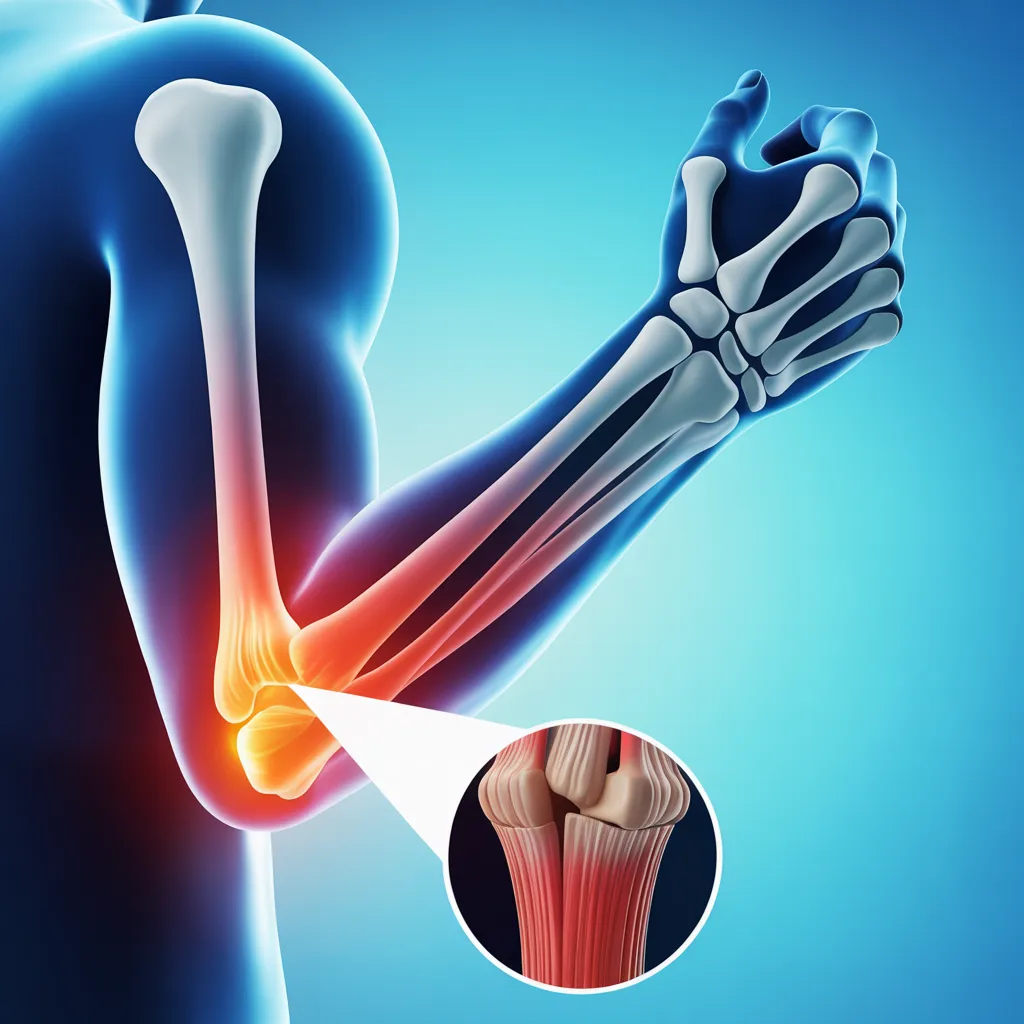
Lateral elbow pain, commonly known as tennis elbow, affects around 1–3% of the adult population. Despite its name, only a small proportion of those who suffer from it play tennis. The reality is that it appears much more frequently in people who perform repetitive gripping movements at work — painters, cooks, office workers — or in any sport involving a racquet, a golf club or repetitive use of the forearm.
For years, the problem was called "epicondylitis" — as if inflammation were the underlying mechanism. But tissue analysis of affected tendons shows no inflammatory cells: what there is is tendinosis, a degenerative alteration of the collagen that makes up the tendon. This distinction is crucial, because anti-inflammatory treatments (cortisone, anti-inflammatories) have limited effectiveness and, in some cases, worsen the long-term prognosis of the tendon.
What structures are involved?
The lateral epicondyle is the bony prominence on the outer side of the elbow where the forearm extensor muscles originate — especially the extensor carpi radialis brevis. When this tendon is overloaded repeatedly, a degenerative process begins that results in structural changes in the collagen: disordered fibres, micro-tears and a local vascular response that does not resolve the problem.
The result is pain when gripping, wrist extension and supination, and tenderness to touch over the lateral epicondyle. It is typically a gradual-onset pain, although it can appear suddenly after a specific effort.
«Tendinopathy tissue shows no inflammatory cells. It is a degenerative process that requires loading and progressive exercise to recover.»
What to avoid and what to do at the start
In the initial phase, when pain is at its highest, the priority is to reduce the overload on the tendon without completely stopping the use of the arm. Complete rest is not beneficial — tendons need load to regenerate — but it is important to identify and temporarily reduce the movements that cause pain: sustained gripping, forceful wrist extension, carrying heavy weights with the elbow in extension.
The use of a forearm strap (tennis elbow brace) worn just below the elbow can reduce tension at the insertion and relieve pain in everyday activities. It should not become a long-term solution, but it can be useful in the acute phase to allow a return to activity.
Physiotherapy exercises for tennis elbow: the four stages
Therapeutic exercise is the most evidence-based intervention for tendinopathy. The key principle is progressive loading: starting with low-load exercises and gradually increasing intensity as the tendon adapts. Below is the typical progression used at Fisioin20:
- 1Eccentric and isometric exercises
The tendon responds well to sustained isometric loading (contraction without movement) and to eccentric loading (controlled lengthening). For example: slow wrist extension with a dumbbell, lowering over 3–4 seconds. 3 sets of 15 repetitions, once or twice daily. Usually causes mild pain during the exercise, which is acceptable if it is tolerable and does not worsen afterwards.
- 2Stretching and self-massage
Once the initial pain has reduced, adding forearm extensor stretches and self-massage with a ball or foam roller on the extensor muscles helps improve tissue mobility and reduce sensitivity.
- 3Progressive loading with resistance
Increasing weight in wrist extension and flexion exercises, progressing to more global movements: grip strength work, wrist rotation, and incorporation into sport-specific or work-specific movements.
- 4Functional and grip exercises
Grip and wrist movements that replicate the usual activity: for tennis players, forehand and backhand movements with a band; for workers, simulated tool or keyboard movements. The goal is not only to have a recovered tendon at rest, but one that tolerates the loads of real life.
Adjunct therapies that complement exercise
Improves vascularisation at the tendon insertion and reduces pain, facilitating the introduction of exercise earlier.
Improves local blood flow and reduces trigger points in the forearm extensor muscles, complementing the exercise programme.
Lateral elbow joint mobilisation techniques have shown good results in reducing pain in the short term.
TENS and ultrasound can help in the acute phase to control pain and allow exercise to begin sooner.
Does cortisone injection work?
Cortisone injections show excellent results in the short term — they reduce pain quickly in the first four to six weeks. However, multiple studies confirm that patients treated with injections have higher recurrence rates at one year compared to those who follow a structured physiotherapy programme. The injection does not address the underlying degenerative mechanism; it only temporarily masks the pain.
This does not mean injections are never useful: in cases of very intense acute pain that prevents the patient from even starting exercise, a carefully considered infiltration may allow the therapeutic window to open. But it should always be accompanied by physiotherapy, never as the only treatment.
How to prevent recurrence
In tennis, backhand with both hands or with a looser grip; correct racquet size and string tension.
Not just the forearm extensors, but the shoulder and scapular stabilisers, which share the load.
If you use a keyboard and mouse many hours a day, adjust the height and posture to reduce forearm tension.
When returning to sport or physical work, increase intensity progressively to allow the tendon to adapt.
Prognosis and realistic timelines
Most tennis elbow cases recover well with a structured programme. The key is persistence: tendons recover slowly — collagen remodelling takes weeks to months. It is normal for there to be weeks of slow progress in the first phase; the key is not to abandon the programme when improvement is not immediate.
A realistic timeline ranges from 6 to 12 weeks for mild to moderate cases, and can extend to 6 months or more in chronic or poorly managed cases. The main predictor of a bad outcome is not the severity of the initial injury, but whether a structured loading programme was applied.
Lateral elbow pain?
We assess your case and design a personalised programme at Fisioin20, physiotherapy in the Salamanca district. C/ Don Ramón de la Cruz, 36, Madrid.
Book your appointment →